Look up any Canadian area code or prefix — region, province, time zone, and original carrier.

Caller Atlas is a free reference for every Canadian telephone area code in service. Look up the exchange (area code + prefix) geography, time zone, overlay relationships, and the carrier each prefix was originally assigned to — it identifies the exchange, never the person calling.
Try 416, 604, 514, or 867.

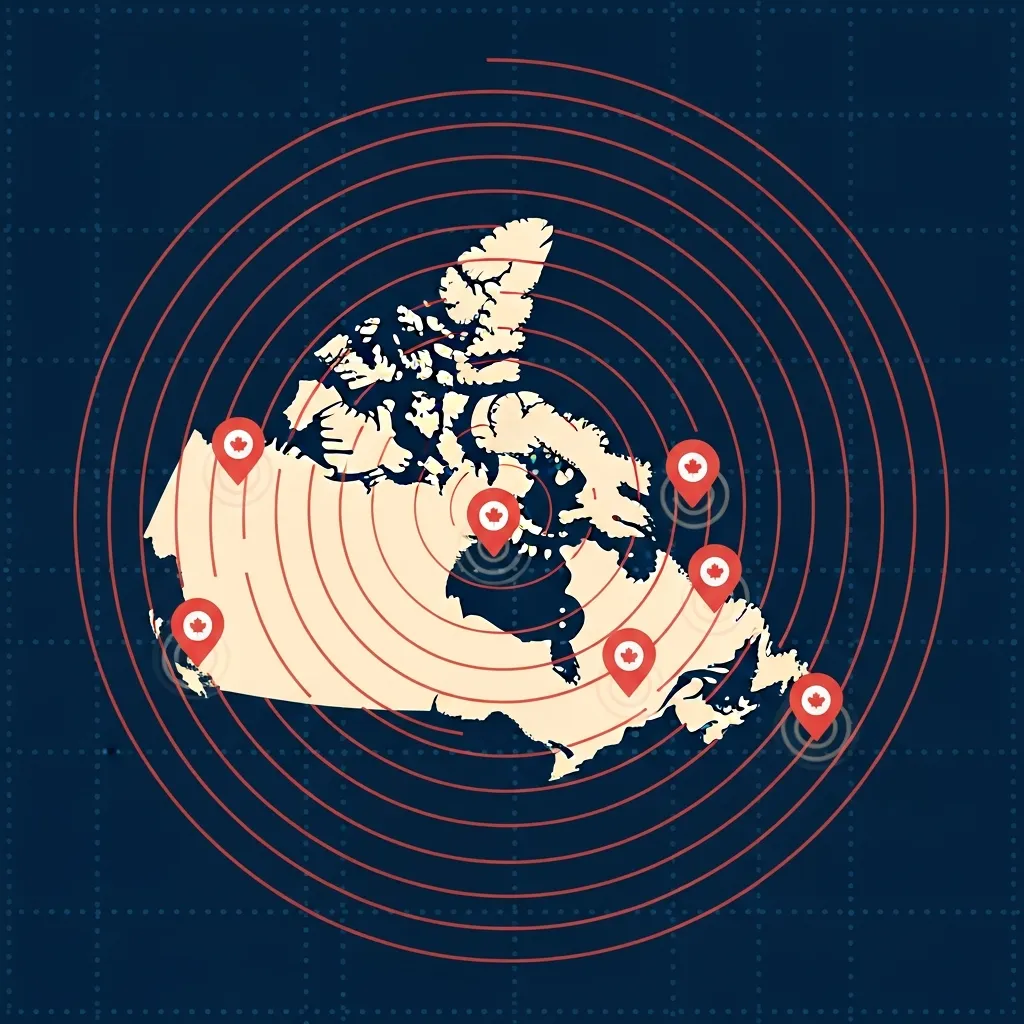
Stylised map of Canada with phone signals

Data freshness check (as of 2026-07-07): 55/55 in-service Canadian area codes matched against Wikipedia's community-maintained NANP table. 1 code(s) on our site (273) aren't yet listed there as in-service — likely a newer overlay ahead of the wiki edit, flagged for review. View the raw check →

55 active area codes

Every numbering plan area assigned to Canada under the North American Numbering Plan, including original assignments and every overlay added since 1947.

132 cities indexed

Find which area codes serve your city — many Canadian cities now sit inside two, three, or four overlapping NPAs.

13 provinces & territories

Browse area codes by province or territory, with notes on time zones, capital cities, and the carriers that operate locally.
Telecommunications tower against a blue sky with clouds

How area codes and carriers connect

Every Canadian area code is a numbering plan area (NPA) tied to physical exchange infrastructure operated by one or more carriers. As overlays are added, several carriers can share a region's coverage across two or three NPAs at once, which is why the same city often shows up under more than one code below.

Browse by area code

Click any code to see the cities it serves, its time zone, related overlay codes, and the major carriers.

204 MB Winnipeg · Brandon 226 ON London · Windsor 236 BC Vancouver · Surrey 249 ON Sudbury · Barrie 250 BC Victoria · Kelowna 257 BC Victoria · Kelowna 263 QC Montreal · Westmount 289 ON Mississauga · Brampton 306 SK Saskatoon · Regina 343 ON Ottawa · Kingston 354 QC Laval · Longueuil 365 ON Mississauga · Brampton 367 QC Quebec City · Lévis 368 AB Calgary · Edmonton 382 ON London · Windsor 403 AB Calgary · Lethbridge 416 ON Toronto · North York 418 QC Quebec City · Lévis 428 NB Moncton · Saint John 431 MB Winnipeg · Brandon 437 ON Toronto · North York 438 QC Montreal · Westmount 450 QC Laval · Longueuil 468 QC Gatineau · Sherbrooke 474 SK Saskatoon · Regina 506 NB Moncton · Saint John 514 QC Montreal · Westmount 519 ON London · Windsor 548 ON London · Windsor 579 QC Laval · Longueuil 581 QC Quebec City · Lévis 584 MB Winnipeg · Brandon 587 AB Calgary · Edmonton 604 BC Vancouver · Surrey 613 ON Ottawa · Kingston 639 SK Saskatoon · Regina 647 ON Toronto · North York 672 BC Vancouver · Surrey 683 ON Sudbury · Barrie 705 ON Sudbury · Barrie 709 NL St. John's · Mount Pearl 742 ON Mississauga · Brampton 753 ON Ottawa · Kingston 778 BC Vancouver · Surrey 780 AB Edmonton · St. Albert 782 NS Halifax · Dartmouth 807 ON Thunder Bay · Kenora 819 QC Gatineau · Sherbrooke 825 AB Calgary · Edmonton 867 NT Whitehorse · Yellowknife 873 QC Gatineau · Sherbrooke 879 NL St. John's · Corner Brook 902 NS Halifax · Dartmouth 905 ON Mississauga · Brampton 942 ON Toronto (overlay)

Browse by province or territory

How Canadian area codes work

Canada shares the North American Numbering Plan (NANP) with the United States and several Caribbean nations. Every Canadian phone number is structured as an area code (called a numbering plan area, or NPA), followed by a 7-digit local number. The area code identifies the geographic region a number was originally assigned to — though with number portability and overlays, the original assignment no longer guarantees the physical location of the device.

Canada's first area codes were assigned in 1947. Just three codes — 902, 514, and 416 — covered the Maritimes, Quebec, and Ontario respectively. As the country grew, those huge regions were split. By the 2000s, most Canadian cities of any size had multiple overlay codes layered on top of the original assignment, because demand for new numbers outpaced what a single three-digit prefix could supply.

Today there are 55 Canadian area codes in active service, including province-wide overlays in Alberta and British Columbia, three overlays on the Island of Montreal, and a single shared code (867) covering all three northern territories. Caller Atlas catalogues every one of them and the cities they reach.

What you can find on Caller Atlas

  • Geographic coverage — for each area code, the province or territory and a list of major cities served.
  • Time zone — Canada spans six time zones; Caller Atlas shows the IANA time zone for every code, including the half-hour offset used by Newfoundland (NST/NDT) and the no-DST oddity of Saskatchewan (CST).
  • Overlay relationships — which other codes share the same geography, plus when each overlay was introduced.
  • Carrier presence — which national and regional carriers operate in each numbering plan area.

Data: Canadian Numbering Administrator (CNAC), as of 2026-07-04. Prefix-level lookups on this site run against CNAC central-office code records bundled with the site.

Featured cities